BEGIN:VCALENDAR
VERSION:2.0
PRODID:-//UBC Department of Psychology//NONSGML Events//EN
CALSCALE:GREGORIAN
X-ORIGINAL-URL:https://psych.ubc.ca/events/event/
X-WR-CALDESC:UBC Department of Psychology - Events
BEGIN:VEVENT
UID:20231123T1747Z-1700761626.8655-EO-37173-2@10.19.146.1
STATUS:CONFIRMED
DTSTAMP:20260314T124340Z
CREATED:20231120T223019Z
LAST-MODIFIED:20231121T185800Z
DTSTART;TZID=America/Vancouver:20231213T140000
DTEND;TZID=America/Vancouver:20231213T153000
SUMMARY: EDI Dialogue and Learning Series: Disability and Psychology: Part 
 2
DESCRIPTION: Following up on Dr. Gagnon’s visit\, here we hope to create a 
 “cozy space” for conversations amongst department members on the intersecti
 ons between disability\, ableism\, and Psychology contexts more specificall
 y.
X-ALT-DESC;FMTTYPE=text/html: <p>[caption id="attachment_37172" align="alig
 ncenter" width="715"]<img class="size-full wp-image-37172" src="https://psy
 ch.cms.arts.ubc.ca/wp-content/uploads/sites/2/2023/11/Headers_20112023.png"
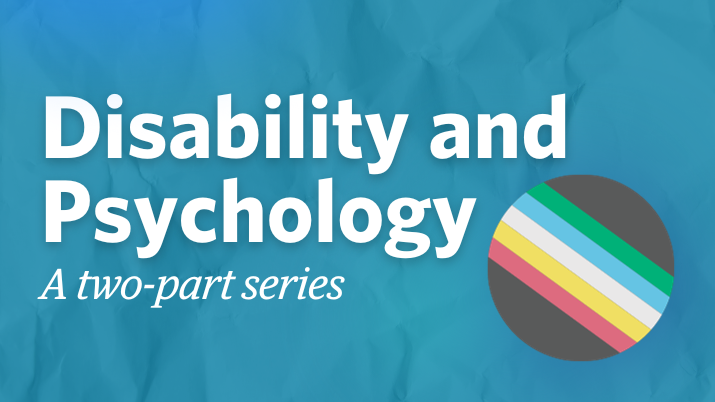
  alt="Disability and psychology: a two-part series. There is a picture of t
 he Disability Pride flag in the corner. It is a grey circle with 5 parallel
  stripes in red\, gold\, pale grey\, blue\, and green" width="715" height="
 402" /> The image includes the Disability Pride Flag. which was a collabora
 tive design effort by Ann Magill\, a disabled woman\, with feedback within 
 the disabled community to refine its visual elements.[/caption]</p><blockqu
 ote><p><span style="font-weight: 400\;">If you have wanted to learn more ab
 out </span><b>disability</b><span style="font-weight: 400\;"> (</span><i><s
 pan style="font-weight: 400\;">what does that label really mean?)\,</span><
 /i> <b>ableism</b><span style="font-weight: 400\;"> (</span><i><span style=
 "font-weight: 400\;">how does bias towards disability manifest in academia 
 and my own life?</span></i><span style="font-weight: 400\;">)\, </span><b>a
 ccessibility</b><span style="font-weight: 400\;"> (</span><i><span style="f
 ont-weight: 400\;">how can I create equitable environments in my lab/classe
 s?</span></i><span style="font-weight: 400\;">)\, and/or the </span><b>inte
 rsection between disability and Psychology</b><span style="font-weight: 400
 \;">\, this EDI Dialogue and Learning series hopes to create opportunities 
 for these conversations.</span></p></blockquote><p><span style="font-weight
 : 400\;">For all of us in the Department of Psychology\, discussions on dis
 ability are highly relevant to our work:</span></p><ul><li style="font-weig
 ht: 400\;" aria-level="1"><span style="font-weight: 400\;"><a href="https:/
 /pair.cms.ok.ubc.ca/wp-content/uploads/sites/145/2022/09/UES-2022-Demograph
 ic-Profile-UBC-Vancouver.pdf">Between 25-48% of UBC undergraduate students 
 identify as disabled</a>\, having a disability\, <a href="https://geog.ubc.
 ca/wp-content/uploads/sites/26/2022/07/Fostering-a-Culture-of-Accessibility
 -within-UBC-Geography-Guide.pdf">or experiencing ongoing health/mental heal
 th conditions</a></span><span style="font-weight: 400\;">.</span></li><li s
 tyle="font-weight: 400\;" aria-level="1"><span style="font-weight: 400\;">D
 espite the high prevalence of disability in undergraduate populations\, <a 
 href="https://psycnet.apa.org/record/2015-12432-001">only ~2% of US Psychol
 ogy faculty disclose having a disability</a></span><span style="font-weight
 : 400\;"> – suggesting a significant “leaky pipeline” for disability in Psy
 chology higher education (and/or\, hesitancy to disclose disability due to 
 stigma).</span></li><li style="font-weight: 400\;" aria-level="1"><span sty
 le="font-weight: 400\;">Psychology involves the study of the range of human
  experiences\, behaviours\, and neurobiology. <a href="https://scholar.goog
 le.com/scholar_url?url=https://ir.library.oregonstate.edu/downloads/kd17cv6
 5c&hl=en&sa=T&oi=gsb-gga&ct=res&cd=0&d=7829420816337656065&ei=8tlbZbj6NfOl6
 rQPyJ25sAU&scisig=AFWwaebCQG6VRa0pTg2Am8oXu6JU">Yet research suggests that 
 <20% of US Psychology departments offer courses that cover disability beyon
 d psychiatric disorders</a>. What disability representation exists tends to
  focus on diagnosis and treatment\, with little mention of topics such as p
 rejudice and acceptance</span><span style="font-weight: 400\;">.  </span></
 li></ul><p><span style="font-weight: 400\;">Join us for a two-part series o
 n 'Disability and Psychology' this December. Come to one or both sessions\,
  depending on your interests.</span></p><hr /><h3><b>PART 2: A Cozy Convers
 ation for Department Members\, on “Disability & the Psychology Context.”</b
 ></h3><p><em>Wednesday\, December 13\, 2:00-3:30 PM</em></p><p><em>Online v
 ia Zoom</em></p><p><a href="https://ubc.zoom.us/meeting/register/u5wlce-uqz
 0iGtEc8mx_Uv1-eJmMy4Te3Dj8"><em>RSVP here</em></a></p><p><span style="font-
 weight: 400\;">Following up on Dr. Gagnon’s visit\, here we hope to create 
 a “<a href="https://twitter.com/kawaiilovesarah/status/1707405085645459940"
 >cozy space</a>”</span><span style="font-weight: 400\;"> for conversations 
 amongst department members on the intersections between disability\, ableis
 m\, and Psychology contexts more specifically. We’ll chat about the perspec
 tives on disability common to Psychology as a discipline\, and how disabili
 ty justice work might take place within our classes\, labs\, and work.</spa
 n></p><p><span style="font-weight: 400\;">Let’s lean into the vibes of the 
 holiday season: grab a mug of your warming-ist winter drink\, and gather 'r
 ound on Zoom with our Psychology community for open\, reflective conversati
 on. All are welcome: faculty\, staff\, post-docs\, graduate and undergradua
 te students\; disabled and non-disabled members.</span></p><p>[buttons][but
 ton link_text="RSVP for part one of the series" link_url="https://ubc.zoom.
 us/meeting/register/u5wsdO2upj8pGtOKgx2jCy6fs8U2smE05_oZ"][/buttons]</p><hr
  /><p><span style="font-weight: 400\;">For anyone interested in furthering 
 additional conversations around disability\, ableism\, and accessibility in
  Psychology\, join the </span><b>EDI Community of Practice on Ableism & Dis
 ability Inclusion</b><span style="font-weight: 400\;">! Regular meetings (h
 eld via Zoom) are intended to start again in January 2024. Contact Lily May
  (</span><a href="mailto:lamay@psych.ubc.ca"><span style="font-weight: 400\
 ;">lamay@psych.ubc.ca</span></a><span style="font-weight: 400\;">) to be ad
 ded to the email list. </span></p><p><span style="text-decoration: underlin
 e\;"><b>Resources on disability at UBC/Psychology:</b></span></p><p><a href
 ="https://disabilityaffinitygroup.ubc.ca/"><span style="font-weight: 400\;"
 >Disability Affinity Group</span></a><span style="font-weight: 400\;">: A c
 ollective of disabled folks from both UBC campuses. </span></p><p><a href="
 https://www.ubcduc.ca/survival-guide"><span style="font-weight: 400\;">Disa
 bilities United Collective</span></a><span style="font-weight: 400\;">: An 
 advocacy and support resource group for disabled students at UBC. </span></
 p><p><a href="https://darndisability.org/"><span style="font-weight: 400\;"
 >Disability Advocacy and Research Network</span></a><span style="font-weigh
 t: 400\;">: A community for disabled psychology scholars and allies. </span
 ></p><p>[cards][card title="Looking for more resources?" text="Visit our ED
 I resources and support page for a consolidated resource list." link_text="
 Visit now" link_url="https://psych.ubc.ca/edi/resources/"][/cards]</p>
CATEGORIES:EDI,Featured News and Events
URL;VALUE=URI:https://psych.ubc.ca/events/event/edi-dialogue-and-learning-s
 eries-disability-and-psychology-part-2/
ATTACH;FMTTYPE=image/png:https://psych.cms.arts.ubc.ca/wp-content/uploads/sites/2/2023/11/Headers_20112023.png
END:VEVENT
BEGIN:VTIMEZONE
TZID:America/Vancouver
BEGIN:STANDARD
TZOFFSETFROM:-0700
TZOFFSETTO:-0800
DTSTART:20231105T090000
TZNAME:PST
END:STANDARD
END:VTIMEZONE
END:VCALENDAR
