
Michael Miller\, University of Calif ornia\, Santa Barbara
Barack Obama\, John Dean & Other Criterion Shifters
We make many decisions throughout a day that require setting a criterion (i.e.\, deciding how strong the evi dence must be)\, from the mundane (“Have I read that article before?”) to t he more critical (“Can I cross the street in time?”). Setting a criterion a lso has important theoretical implications\, such as understanding the natu re of some false memories. Many decision models can accurately predict how the placement of a criterion to fit a given situation can affect performanc e\, especially when the evidence is uncertain. Yet\, no existing model expl ains how an individual sets a decision criterion\, and why people are gener ally suboptimal in shifting a criterion in order to achieve the most benefi cial outcome. We have discovered that while some people are actually quite good at adapting their criterion\, others are not at all. Our research seek s to explain this phenomenon using a combination of behavioral and neurosci entific methods.
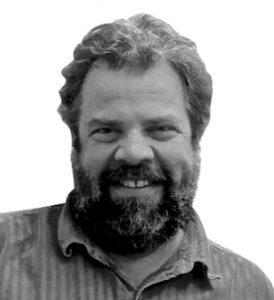 Mike Miller is interested in the psychological and neur
al processes underlying human memory and decision-making. His research empl
oys a variety of techniques\, including functional magnetic resonance imagi
ng (fMRI)\, event-related potentials (ERP)\, transcranial magnetic stimulat
ion (TMS)\, split-brain studies\, and signal detection analysis. These stud
ies range from investigations into prefrontal and parietal cortex activity
associated with shifts in decision criteria to attempts to uncover the func
tions of the parietal lobe during successful retrieval. A major component o
f his research examines the sources variability of individual patterns of b
rain activity during an episodic memory task. Ultimately\, his goal is to u
se these neuroscientific studies to understand the processes of the mind wh
en remembering a past event\, and to appreciate the uniqueness of these pro
cesses at the individual level.
[youtube]https:// www.youtube.com/watch?v=iat2mM9C1RM[/youtube]
Annually the Depa rtment of Psychology hosts a Colloquia Series throughout the academic year.
LOCATION:Woodward 6 GEO:49.264569;-123.247607 URL;VALUE=URI:https://psych.ubc.ca/events/event/department-colloquium-dr-mi ke-miller-2/ END:VEVENT BEGIN:VTIMEZONE TZID:America/Vancouver BEGIN:DAYLIGHT TZOFFSETFROM:-0800 TZOFFSETTO:-0700 DTSTART:20160313T100000 TZNAME:PDT END:DAYLIGHT END:VTIMEZONE END:VCALENDAR