
Dr. Kent Berridge\, Universit y of Michigan
Brain Generators of Liking and Wantin g
Pleasure ‘liking’ is an essential psychologic al function for wellbeing\, and incentive ‘wanting’ can normally give zest to life. Yet clinical disorders of addiction\, binge eating\, depression an d schizophrenia can involve dysfunction of ‘liking’ and/or ‘wanting’. Recen t findings indicate that ‘liking’ is generated by a surprisingly frail and tiny network of hedonic hotspots distributed across brain limbic structures . By contrast\, ‘wanting' for pleasures has a much more robust and larger brain generating mesocorticolimbic network\, which interacts with amygdala- related mechanisms to focus ‘wanting’ on particular incentive targets. Fin ally\, ‘wanting’ networks can also switch mode to generate some active-copi ng forms of fear. Such conclusions have implications for understanding norm al psychological function\, and may give insights into several disorders.
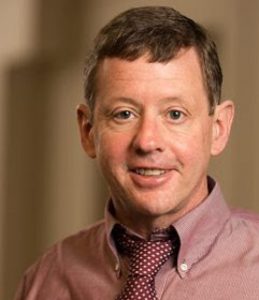 Kent Berridge is the James Olds collegiate
professor of psychology and neuroscience in the department of psychology at
the University of Michigan. Dr. Berridge’s current research focuses on ans
wering questions such as: How is pleasure generated in the brain? Is happin
ess in the brain? How do wanting and liking interact? What causes addiction
? Does fear share anything with desire? Can an emotion ever be unconscious?
Among other honors\, Berridge has been a Guggenheim fellow and a Fulbright
senior scholar.
Kent Berridge is the James Olds collegiate
professor of psychology and neuroscience in the department of psychology at
the University of Michigan. Dr. Berridge’s current research focuses on ans
wering questions such as: How is pleasure generated in the brain? Is happin
ess in the brain? How do wanting and liking interact? What causes addiction
? Does fear share anything with desire? Can an emotion ever be unconscious?
Among other honors\, Berridge has been a Guggenheim fellow and a Fulbright
senior scholar.
[youtube]https://www.youtube.com /watch?v=bUllBT85yvw&[/youtube]
Annually the Department of Psyc hology hosts a Colloqui a Series throughout the academic year.
ORGANIZER;CN="artspress":MAILTO:michael.ha@ubc.ca URL;VALUE=URI:https://psych.ubc.ca/events/event/department-colloquium-dr-ke nt-berridge/ END:VEVENT BEGIN:VTIMEZONE TZID:America/Vancouver BEGIN:DAYLIGHT TZOFFSETFROM:-0800 TZOFFSETTO:-0700 DTSTART:20170312T100000 TZNAME:PDT END:DAYLIGHT END:VTIMEZONE END:VCALENDAR